How Many Wineries Are In Yarra Valley?
There is no official count of Yarra Valley wineries. Here are the verified numbers that come closest, what counts as a winery anyway, and how many cellar doors one day can realistically cover.
How Many Wineries Are In Yarra Valley?
Nobody publishes an official count of Yarra Valley wineries, and any specific number you read online should be treated with suspicion. The two closest verified figures are 90 members of Wine Yarra Valley, the region's grower and winemaker association, and 39 businesses that reported a Yarra Valley crush to Wine Australia's 2026 national vintage survey. Neither is a count of wineries, and neither is a count of cellar doors.
The gap between those two numbers is the real story, and it is worth understanding before you plan anything. The 90 figure comes from the association's own membership page, which describes "90 members consisting of grape growers and winemakers, ranging from large, globally recognised wine brands, to small, artisan producers." That is a paid membership register, not a census. Some members grow grapes and never make wine. Some make wine and do not grow grapes. A handful of small producers belong to no association at all.
The 39 figure is narrower still. It counts only the businesses that both crushed Yarra Valley fruit in 2026 and answered a voluntary survey, and Wine Australia itself estimates that survey captures about 87 per cent of the national crush. A winery that made nothing that year, or simply did not respond, is invisible to it.
So when a tourism brochure claims a round, confident number, ask which register it is counting. Almost always the answer is: none. The number was inherited from an older brochure. For more on which producers actually matter to a visitor, our guide to the valley's wineries works from named producers rather than counts.
What Actually Counts As A Winery?
A winery, a vineyard and a cellar door are three different things, and the Yarra Valley has plenty of each without any of them lining up neatly. A winery crushes and ferments grapes. A vineyard grows them. A cellar door is a shop where the public can taste. Some Yarra Valley businesses are all three, some are one, and a visitor counting "wineries" is usually counting cellar doors without realising it.
The distinction matters here more than in most regions because the Yarra Valley has a long tradition of growers who sell their entire crop and never pour a glass for the public. In the 2026 vintage, 1,752 tonnes of the region's 5,894 tonne reported crush was purchased fruit, meaning well over a quarter of the grapes made as Yarra Valley wine were grown by someone other than the winery that bottled it. Those growers are part of the wine region. They are not part of a day out.
There is also a category the region added recently: producers with no cellar door of their own who pour through someone else's. Urban Vineyard, a bar near the gateway to the valley that opened in 2024, operates as a shared cellar door for small winemakers who have nowhere to welcome visitors. If you counted venues where you can taste Yarra Valley wine, you would include it. If you counted wineries, you would not.
The legal definition is its own thing again. The Geographical Indication "Yarra Valley" was entered in the Register of Protected Names on 30 October 1996, and its boundary is a textual description drawn from the old County of Evelyn, following mountain watersheds and two rivers, covering 3,120 square kilometres. Any grape grown inside that line can carry the region's name on a label. The GI says nothing about how many businesses operate there, which is why Wine Australia's GI record is the place to check where the region ends, and a membership list is the place to check who is in it.
Here is how the two registers that do exist compare, and what each one actually measures:
| Register | Count | What it actually measures | What it leaves out |
|---|---|---|---|
| Wine Yarra Valley membership | 90 members | Paid-up grape growers and winemakers of all sizes | Non-members; growers who make no wine are included, so it overcounts makers and undercounts nothing |
| National Vintage Report 2026 | 39 businesses | Winemakers who reported a Yarra Valley crush in the 2026 survey | Non-respondents and producers who crushed nothing that year |
| National Vineyard Scan 2020 | 2,837 hectares | Planted vineyard area, measured by satellite survey | Says nothing about how many businesses own those vines |
If a day of tasting is the goal rather than a statistics lesson, a day trip from Melbourne is built around the cellar doors, not the census.
How Many Cellar Doors Can You Visit In One Day?
A realistic day in the Yarra Valley covers three to five cellar door stops, and the tours that promise more usually count non-winery stops such as a chocolaterie, a distillery or a farm gate shop in the total. Driving between cellar doors takes real time, tastings run 30 to 45 minutes each, and lunch needs an hour. Four proper stops plus lunch is a full eight-hour day.
The region's own geography sets the pace. Coldstream, the densest cluster of cellar doors, is about 51 km by road from the Melbourne CBD, and Healesville at the eastern end is about 67 km, so a day that spans both ends spends a meaningful chunk of its hours on the Melba Highway rather than at a bar. A small-group tour that runs three stops in five hours, like the half-day options in our half-day tour guide, is not being lazy, it is being honest about the clock.
The full-day tours on the roster confirm the arithmetic. The Full-Day Grazing Tour runs eight hours and confirms five stops, but two of them are Coldstream Dairy and the Yarra Valley Chocolaterie and Ice Creamery, leaving three wine producers. The Four Cellar Doors tour, as its decision name says outright, is four cellar doors plus lunch in eight hours. Even the ten-hour small-group day, the longest standard format available, confirms four winery stops.
That ceiling is why the hop-on hop-off bus exists, and why private tours sell. If four stops is the practical maximum for a driven day, the only ways to see more are to stretch the day, cut the time per stop, or come back tomorrow. For travellers trying to see the region without driving at all, the question of how to move between cellar doors is answered in how to get around the wineries.
Why Does The Number Keep Changing?
The count of places you can taste Yarra Valley wine moves every year, and 2025 moved it more than most: Innocent Bystander closed its Healesville cellar door in March 2025, Oakridge closed its fine-dining restaurant in June, while Storm Ridge Estate opened at Coldstream, Giammarino relocated to Healesville, and Punt Road opened a purpose-built cellar door in October. Any published count is out of date within months.
This churn is the strongest reason to trust an operator's current stop list over an old blog post, including this one. A tour listing that confirms its stops is a live commercial document: if it names a cellar door, the operator is selling that visit today. A magazine feature from two years ago may send you to a door that no longer opens.
The Healesville end of the valley shows how fast the map redraws. The Healesville Makers Quarter was established in March 2025 as a six-producer precinct within one block, banding wine, beer, gin and dining together so visitors can walk between them. That single development changed both the count of tasting venues in the town and the way a car-free visitor can experience them. Meanwhile Punt Road's new cellar door at 12 St Huberts Road, Coldstream, sits 400 metres from its original home, which matters to anyone following an old address to the wrong gate.
Ownership moves too. Endeavour Group announced in July 2026 that it is selling most of its winery assets, including Oakridge, shifting to a model of nearly all flexible sourcing of purchased bulk wine and grapes. The winery keeps making wine; who owns it does not stay still. None of this changes whether the region is worth visiting, but it changes which door you should be standing at.
How Big Is The Region Behind The Number?
The Yarra Valley Geographical Indication covers 3,120 square kilometres, but its planted vineyard area is just 2,837 hectares, about 2 per cent of Australia's total, measured by the National Vineyard Scan 2020. It is a large region with a small crop: the 2026 crush was 5,894 reported tonnes, roughly 1 per cent of the national crush, and Yarra Valley fruit sold for about four and a half times the national average price per tonne.
Those figures, from Wine Australia's National Vintage Report 2026, explain a lot about what a visit feels like. This is not a region of vast industrial estates. The average purchase value of Yarra Valley grapes in 2026 was $2,535 per tonne against a national average of $570, which is what small yields and premium demand do to a price. Small, expensive fruit tends to mean small, carefully run cellar doors, and a landscape where the person pouring your tasting is often the person who made the wine.
The 2026 season was also unusually hard. The estimated crush fell 31 per cent on the previous year, and Yarra Yering's Andrew Fleming described it as second only to 2011 as the most challenging vintage he has worked, citing cold and wet flowering, hail, and rain at the wrong times. A region this small absorbs a bad season in a way a bulk region does not, which is one more reason the number of operating cellar doors in any given year tells you something real about the year itself.
Does The Exact Number Matter For Planning A Visit?
For a visitor, no. Whatever the true count of cellar doors turns out to be, you will see between three and five in a day, and the quality of those three to five depends on which tour or route you choose, not on the total. The number that matters is how many stops fit your pace, your budget and whether anyone in your group is happy to skip lunch.
The planning question worth asking is a different one: which end of the valley, and which style of producer. Coldstream and the area around it pack the densest cluster of the famous names, including the sparkling houses, within a short drive of each other. Healesville offers the walkable Makers Quarter plus the sanctuary and the town's restaurants. Yarra Glen and the north-west hold larger estates with the room for a long lunch. A day built around one of these clusters beats a day spent driving the full length of the region twice.
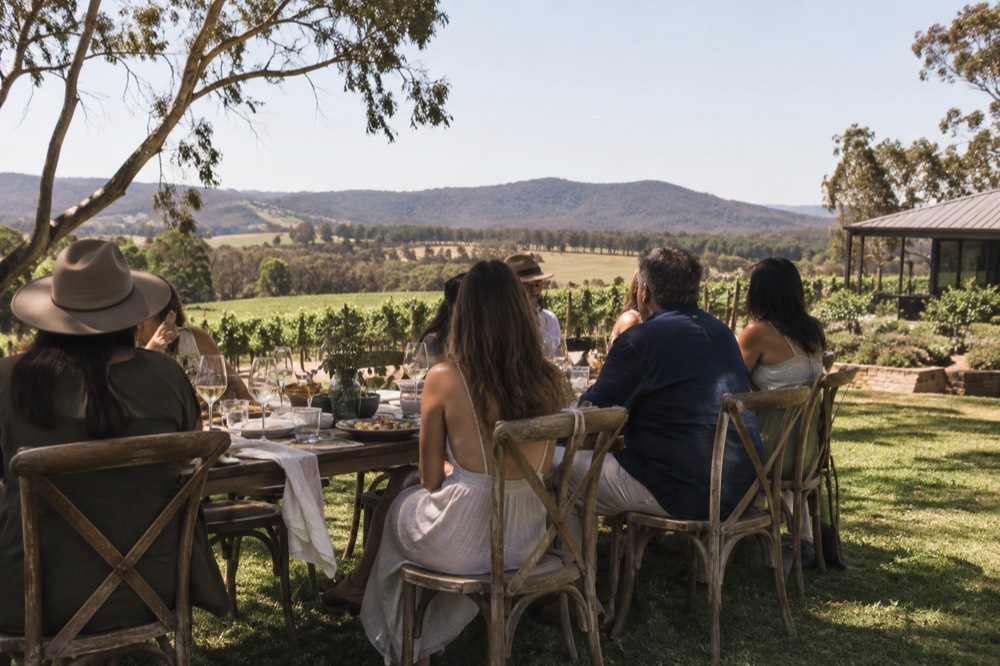
Budget shapes the count as much as distance does. Tasting fees and tour prices vary widely, and the full cost picture, including what a driven day does and does not include, is laid out in our wine tour cost guide. A private tour with your own driver, for instance, changes the arithmetic again: you are paying for the freedom to add a fourth or fifth stop, and for the fact that nobody in your group has to hold back at the tasting bench. That is the quiet logic behind every driven tour in the region, and the reason Yarra Valley Wine Tours exists at all: Victoria's 0.05 blood alcohol limit applies from the first glass, and the limit is an offence at 0.05 exactly, not above it.
Common Questions
How Many Wineries Are In Yarra Valley?
There is no official count. The closest verified figures are 90 members of Wine Yarra Valley, the region's association of grape growers and winemakers, and 39 businesses that reported a Yarra Valley crush to Wine Australia's 2026 vintage survey. Neither number is a count of wineries, and no authority publishes a count of cellar doors.
Why do websites give different numbers?
Because almost none of them cite a register. Most round numbers are recycled from older tourism copy. The two registers that do exist count different things: a paid membership list of growers and winemakers, and a voluntary crush survey of winemakers only.
How many cellar doors can I visit in one day?
Realistically three to five. Driving between cellar doors takes real time, a tasting runs 30 to 45 minutes, and lunch needs an hour. The full-day tours on the market confirm between three and five stops in an eight-hour day, and some of those stops are chocolateries or dairies rather than wineries.
Does the number of wineries change over time?
Yes, materially. In 2025 alone, Innocent Bystander closed its Healesville cellar door, Oakridge closed its fine-dining restaurant, Storm Ridge Estate opened at Coldstream, and Punt Road opened a new purpose-built cellar door. Any count is out of date within months.
Is the Yarra Valley a big wine region?
It is geographically large but agriculturally small. The GI covers 3,120 square kilometres, but planted vineyard area is 2,837 hectares, about 2 per cent of Australia's total, and the 2026 crush was roughly 1 per cent of the national total. The fruit, however, sells for about four and a half times the national average price per tonne.
Do I need to visit a certain number of wineries to enjoy the region?
No. Three well-chosen cellar doors with a relaxed lunch generally beat six rushed tastings. Pick a cluster, such as Coldstream or Healesville, and let the day breathe.