Getting To The Yarra Valley Without A Car: Train, Bus And What Actually Works
The train reaches Lilydale in under an hour. The wine region starts on the other side of Lilydale. Here is exactly what that gap looks like, and the ways across it.
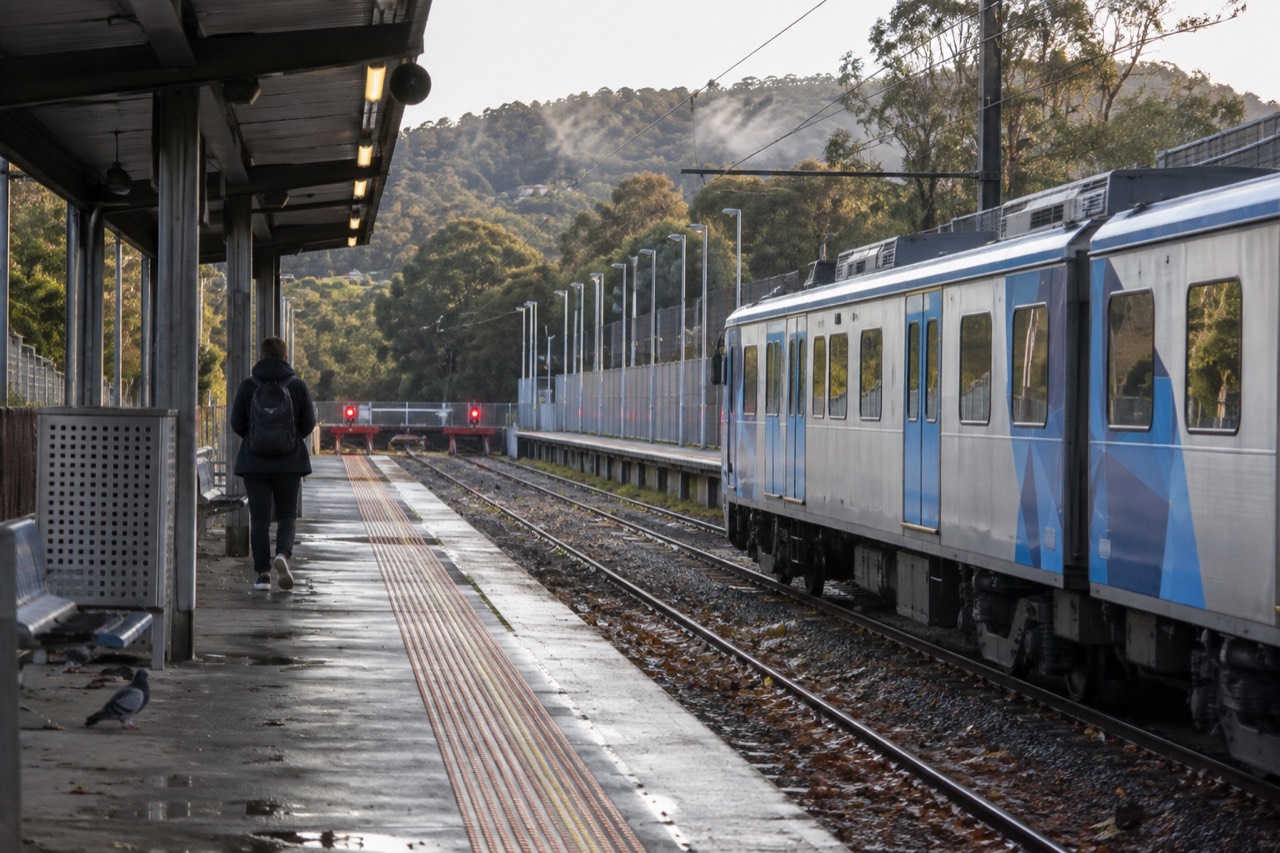
Short answer
The Lilydale line takes a median 55 minutes from Flinders Street, and it stops at Lilydale. Beyond that the valley is bus territory: route 685 runs to Healesville in about 44 minutes but serves no cellar door. A car-free day works best with a driven tour, the hop-on hop-off wine bus, or a walkable cluster like Healesville Makers Quarter.
Can You Get To The Yarra Valley By Train From Melbourne?
Yes, but only to the edge. The Lilydale line runs from Flinders Street to Lilydale Station in a median 55 minutes on a direct service, and Lilydale is the end of the rail network. The wine region proper, Coldstream, Yering, Yarra Glen, Healesville, all sits beyond the train line, between 9 and 29 kilometres further on. The train gets you to the valley's front gate, not into it.
That is the single most important fact for anyone searching for a Melbourne to Yarra Valley train, and it shapes everything else in this guide. The metropolitan train line that reaches the valley is the Lilydale line, and its outer terminus is Lilydale Station. A full Flinders Street to Lilydale service via the City Loop calls at 26 stations, from Flinders Street and Southern Cross through Richmond, Box Hill and Ringwood out to Mooroolbark and Lilydale.
One thing that changed recently and does not affect this journey: the Metro Tunnel opened on 30 November 2025, and from February 2026 the Cranbourne, Pakenham and Sunbury lines run through it. The Lilydale line is not a Metro Tunnel line. Passengers heading for the valley still use Flinders Street and the City Loop exactly as before, so nothing about how you reach Lilydale has changed.
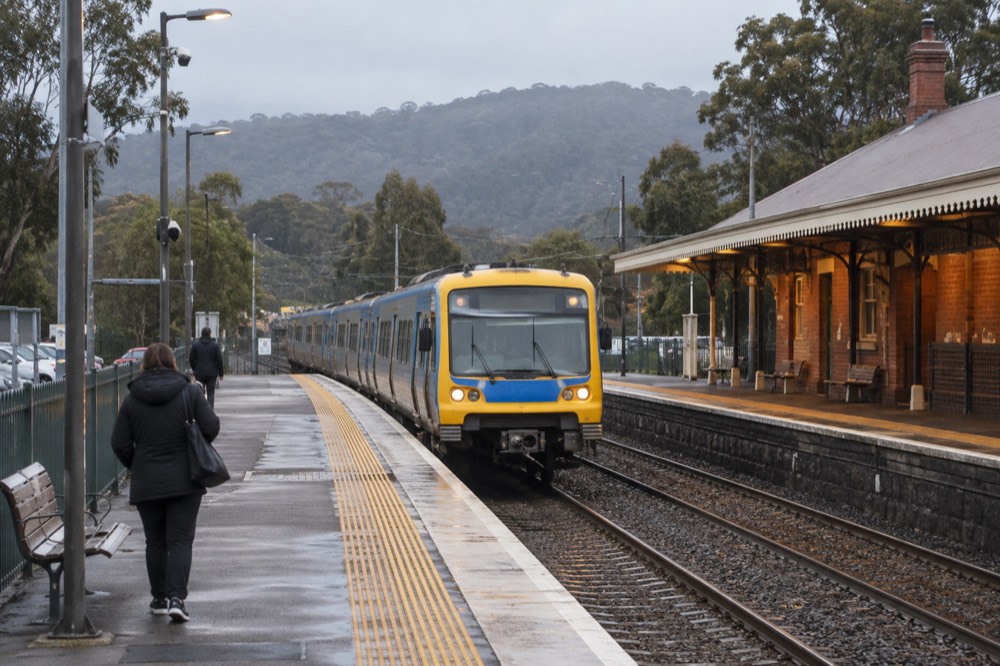
Here is what the timetable feed actually says about the run, computed from Transport Victoria's own schedule data:
| Journey | Median time | Trips in the feed | Range |
|---|---|---|---|
| Flinders Street to Lilydale, direct | 55 minutes | 156 | 51 to 64 minutes |
| Flinders Street to Lilydale, via City Loop | 68 minutes | 507 | 58 to 74 minutes |
Those are scheduled times, not delays. A direct service is worth targeting if you are planning a tight day, because 13 minutes each way adds up when the bus connection at the far end is only so frequent. The practical advice: check whether your service runs direct or through the Loop before you commit to a fixed bus connection at Lilydale.
For a fuller picture of the whole day, including the drive most visitors choose instead, see our day trip to the Yarra Valley from Melbourne guide.
How Much Does The Train And Bus Actually Cost?
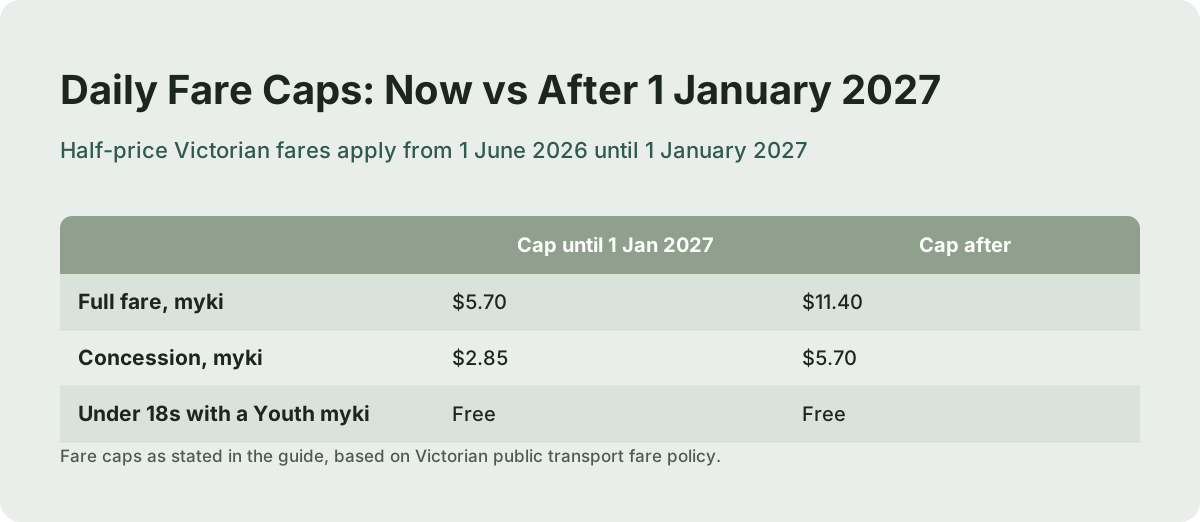
Less than almost anyone expects, for a limited window. Victorian public transport is half price for everyone from 1 June 2026 until 1 January 2027, so the full-fare daily cap falls from $11.40 to $5.70 and the concession cap from $5.70 to $2.85. A Melbourne to Lilydale return, with the bus beyond included, currently caps at $5.70 a day. That halves back to $11.40 when the policy ends on 1 January 2027.
The half-price policy covers metropolitan trains, trams and buses and regional trains, coaches and buses, including the intertown and regional town bus services that serve the valley's towns. It excludes SkyBus, ferries and non-subsidised regional bus services. Passengers tap on as usual and the fare halves automatically, so there is nothing to sign up for.
| Fare type | Daily cap until 1 Jan 2027 | Daily cap after |
|---|---|---|
| Full fare, myki | $5.70 | $11.40 |
| Concession, myki | $2.85 | $5.70 |
| Under 18s with a Youth myki | Free | Free |
The under-18 line is worth spelling out for families: all passengers under 18 travel free on all Victorian public transport, statewide, from 1 January 2026, provided they carry a Youth myki as proof and still tap on and off. A family of four with two teenagers can currently do the entire return journey for $11.40 a day, less than a single glass at most cellar doors. The Transport Victoria announcement sets out the half-price policy in full.
Cost, though, was never the real obstacle. The obstacle is where the network stops.
What Happens After Lilydale? The Bus Reality
Route 685 runs from Lilydale Station to Healesville with 39 stops and a median end-to-end time of 44 minutes, and not one of those 39 stops is named for a winery, vineyard or cellar door. The closest the route comes to the wine landscape is two stops on Healesville to Yarra Glen Road, TarraWarra Museum of Art and Tarrawarra Abbey. Public transport delivers you to towns, not to tasting rooms.
That is the finding from searching every stop name on the route against winery, vineyard, estate, cellar and wine. It is the honest, sourced version of a claim usually made loosely: you cannot tour the Yarra Valley's cellar doors on public transport. You can reach the valley, and you can reach several of its towns, but the cellar doors themselves sit down side roads and along highways the buses do not serve.
The frequency is workable if you plan around it. Counted for specific dates from the feed's calendar, route 685 ran 49 trips across both directions on a mid-September Wednesday, 38 on the Saturday and 23 on the Sunday. Weekends are thinner, and the last services of the day matter enormously if you are returning to Melbourne, because a missed connection at Lilydale means a long wait for the next train.
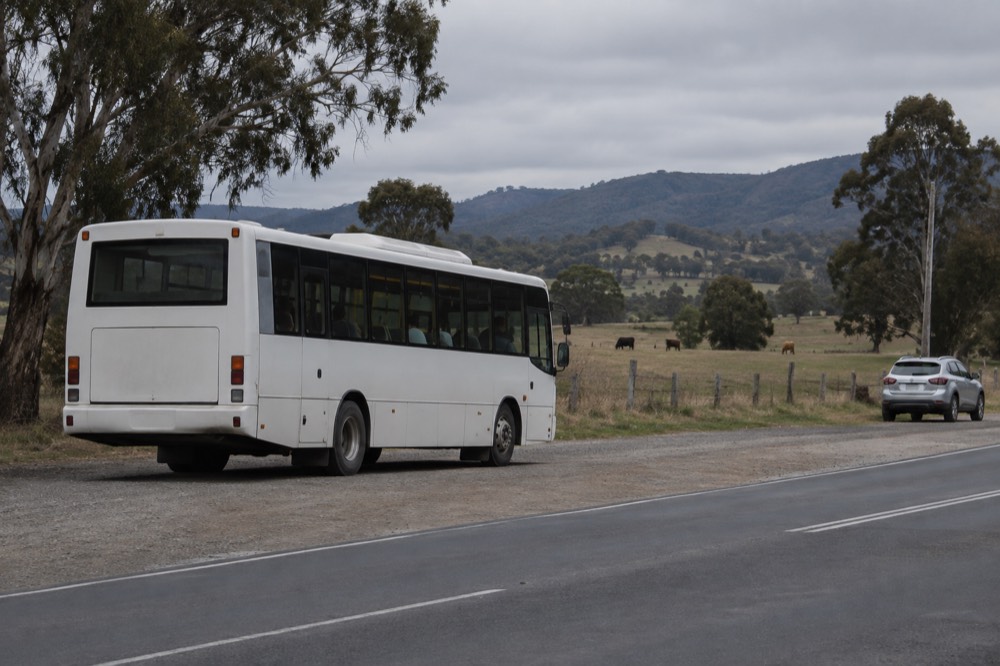
How far each valley locality sits beyond the end of the line, by road:
| From Lilydale Station to | Distance | Free-flow drive |
|---|---|---|
| Coldstream | 9.5 km | 10 min |
| Yering | 11.1 km | 13 min |
| Seville | 14.3 km | 17 min |
| Yarra Glen | 16.2 km | 19 min |
| Tarrawarra | 20.0 km | 20 min |
| Healesville | 25.6 km | 29 min |
| Yarra Junction | 28.9 km | 32 min |
Add it up and the picture is clear: Flinders Street to Healesville is roughly 55 minutes of train plus roughly 44 minutes of bus, before any interchange wait, and it puts you in the town, not at a cellar door. The full end-to-end reality is laid out in our getting around Yarra Valley wineries article, which covers the in-valley movement problem once you have arrived.
Can Rideshare Or A Taxi Bridge The Gap?
Sometimes, and at a cost most people underestimate. Coldstream, the heart of the sparkling and cellar-door cluster, is about 51 km and under an hour from the CBD at free-flow speed, but it is also nine and a half kilometres past the end of the train line. That last gap is short enough to bridge by rideshare and long enough for the fare to sting, especially for a return trip at day's end when availability thins out.
The structural problem is that the valley is a dispersed, rural region. A rideshare from Lilydale to one cellar door solves one leg of one visit; the next cellar door is typically another 5 to 15 km of road, and you will need another car for that too. Three or four stops in a day means three or four separate bookings in an area where waiting times are unpredictable. Visitors regularly report that the morning rides out of Lilydale are easy and the afternoon rides back are not.
There is also a legal dimension worth knowing. Victoria's general drink-driving limit is 0.05, and the offence is committed at 0.05 or more, not above it. A visitor on a full overseas licence is on 0.05, not zero, but learner and probationary drivers are on a true zero limit. If anyone in your group holds a Victorian P-plate, one shared tasting can put them over their limit as a driver. This is the honest reason driven tours exist at all, and it applies just as strongly to the rideshare-out, drive-home fantasy as to a full self-drive day.
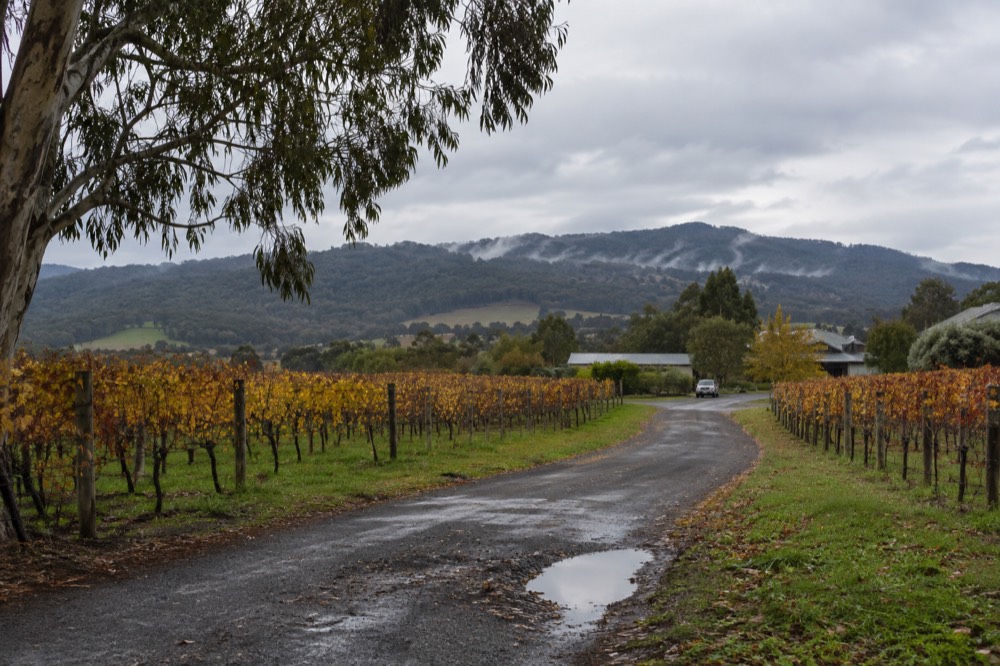
A smarter use of rideshare is to treat it as the connector, not the tour. Take the train to Lilydale, rideshare to a single walkable cluster, and book the return for a set time. Which clusters are actually walkable is the next section.
Which Cellar Doors Can You Actually Reach Without A Car?
A small and specific set. Healesville Makers Quarter, established in March 2025, bands six producers together in an industrial precinct so visitors can reach wine, beer, gin and dining on foot within one block, and it is the only genuinely walkable tasting cluster in the region. Beyond it, the options are the two TarraWarra bus stops and Urban Vineyard at Ringwood East, near the gateway to the valley.
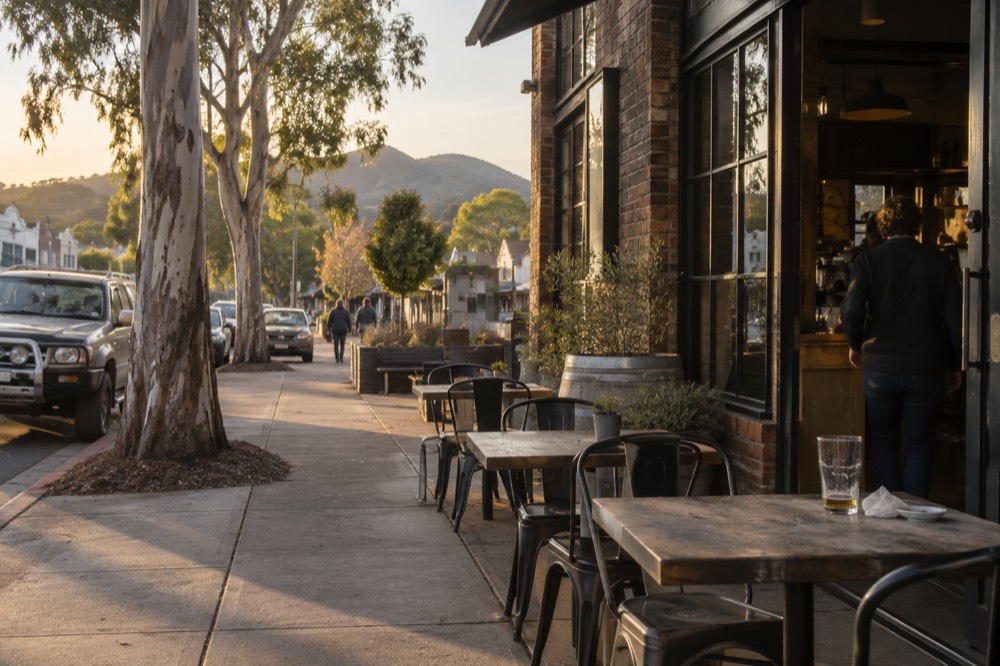
Healesville is the best base for a car-free day precisely because of the Makers Quarter. Winemaker Dino Giammarino relocated his eponymous winery and cellar door there in March 2025, and the precinct puts multiple producers within a short walk of the town's bus stops and restaurants. The reporting that documented the precinct's establishment describes it as a deliberate answer to the valley's dependence on cars.
The TarraWarra pair of stops is the other real option. Route 685 is the only public transport in the region that comes anywhere near the wine landscape, and it names two stops there: TarraWarra Museum of Art and Tarrawarra Abbey. The museum is a serious destination in its own right, and it opened the Eva and Marc Besen Centre in March 2025, a visible art storage and events building on its Healesville site, per the museum's own media release. Art and architecture you can reach by bus; the cellar doors around it, you cannot.
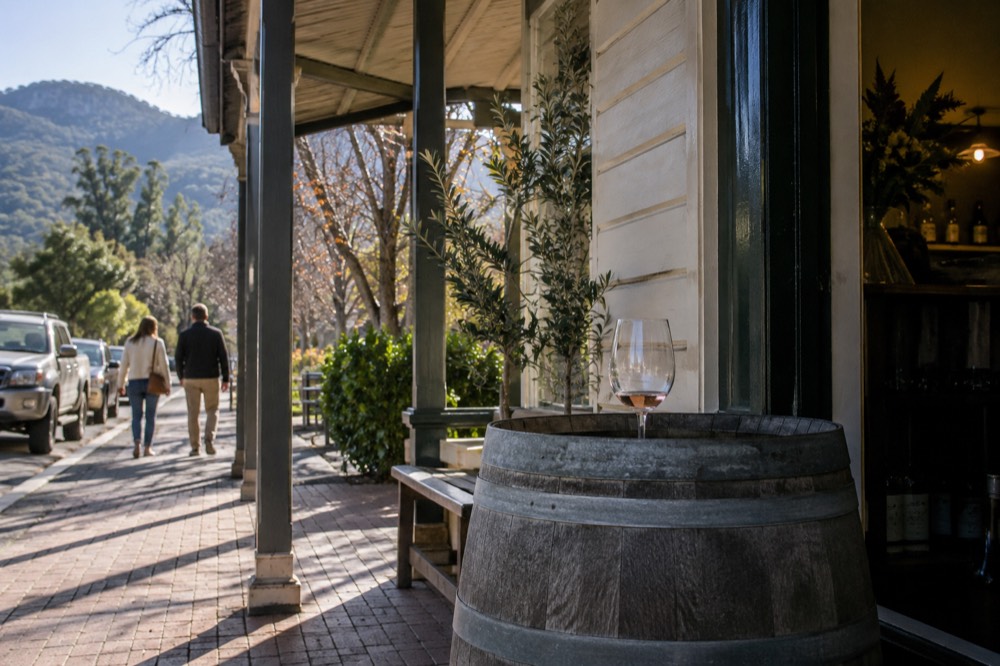
One more genuinely car-free option sits on the Melbourne side: Urban Vineyard at Ringwood East, a bar that doubles as a cellar door for small winemakers who have none of their own, opened in 2024 near the gateway to the valley. It is on the Lilydale line, so you can taste small-producer Yarra Valley wine without leaving the rail network. Scope matters: Ringwood East is outside the wine region itself. The wider set of guides lives on Yarra Valley Wine Tours.
| Car-free option | Where | What you get |
|---|---|---|
| Healesville Makers Quarter | Healesville, walkable | Six producers, wine, beer, gin, dining, one block |
| TarraWarra Museum of Art | Tarrawarra, bus stop on route 685 | Major art museum, new Besen Centre |
| Urban Vineyard | Ringwood East, on the Lilydale line | Small-producer wine without leaving the rail network |
| Healesville town | End of route 685 | Restaurants, breweries, shops, all walkable |
Is The Hop-On Hop-Off Wine Bus A Better Option?
For a tasting-focused day, often yes. The hop-on hop-off wine bus runs a Yarra Valley RED route of four winery stops, from $68.26, with a 5 rating across 270 reviews and free cancellation, and it is the one scheduled service that actually connects cellar doors rather than towns. It solves the exact problem the public network cannot: movement between tasting rooms.
The operator added three new venues to its Yarra Valley RED route from 2 June 2025, among them SOUMAH of Yarra Valley and Riverstone Estate, per its own dated route announcement. That matters because a hop-on hop-off product is only as good as its current stop list, and an operator's own dated statement is the only safe source for which stops a service actually reaches. It also took silver in the Tour and Transport Operators category at the 2025 Victorian Tourism Awards, decided 3 December 2025, which is the only independently judged, dated award result naming a Yarra Valley tour operator the research sweep found.
The trade-off is structure. You are on the service's timetable, not your own, and the RED route covers a fixed set of venues. If a specific cellar door is the reason for your trip, check the current route before booking rather than assuming. Our full Yarra Valley hop-on hop-off wine tour guide covers how the route works in detail.
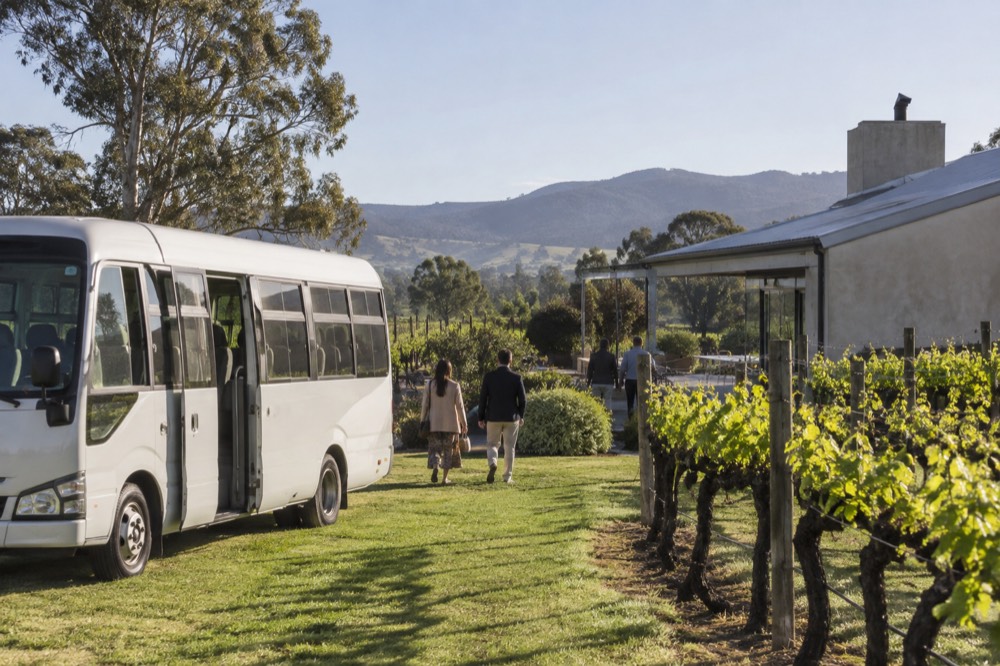
The service also ran a limited Winter Purple Route on selected dates from May to August 2026, with direct pickups from the Melbourne CBD, built around cellar doors with fireplaces and marketed as a day out under $100. That was a limited run that ended in August 2026, so treat it as evidence of what the operator does in the off-season rather than a bookable product now.
What About A Half-Day Tour That Starts In The City?
This is the option most car-free visitors overlook. A half-day tour with hotel pickup compresses the whole transport problem into one booking: the relaxed half-day option runs 5 hours from $85.87, with a 4.8 rating across 37 reviews, lunch optional and free cancellation. You never touch the train, the bus or a rideshare app, and the driving question disappears entirely.
Compare that with the fully self-powered day. The train and bus cap at $5.70 while the half-price policy runs, which is unbeatable value, but the cellar doors it reaches are essentially the Healesville walkable set. A driven half-day costs about $80 more and reaches three or four cellar doors chosen by someone who knows the roads. For a first visit, the driven day delivers more of the region per hour; for a slow, cheap day in one town, the train wins.
The small-group half-day is another strong fit: 5 hours, from $97.42, 4.7 across 243 reviews, three cellar door stops confirmed, hotel pickup and free cancellation. Both formats pick you up where you are staying, which removes the Flinders Street departure time from your planning altogether.
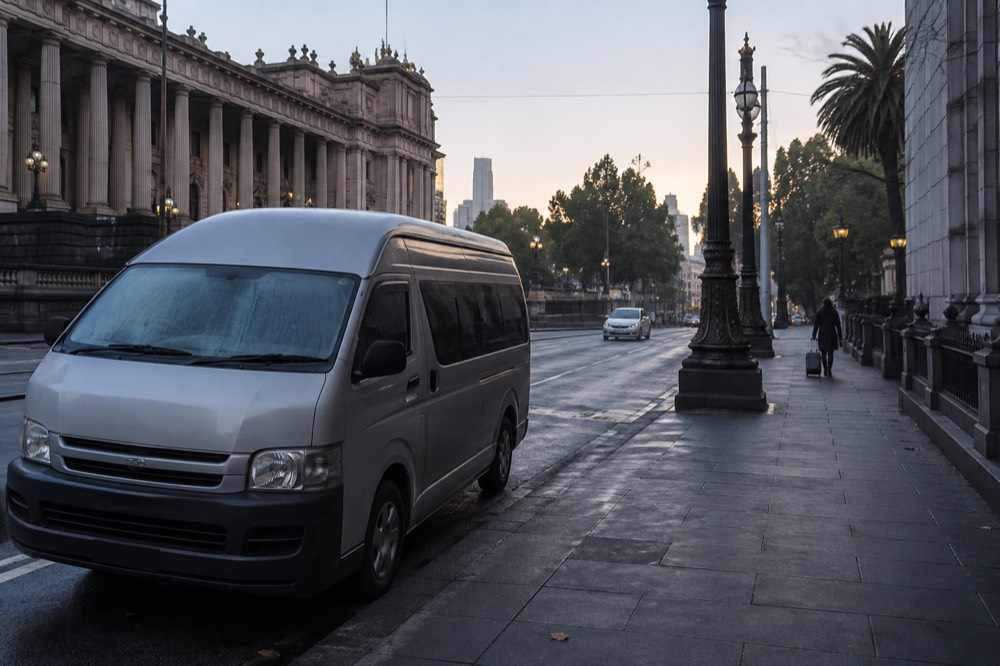
Pickup logistics vary by listing, and they are worth reading before you book; our Yarra Valley wine tour pickup points guide explains how city pickups work and what to expect on the morning.
Can A Balloon Flight Replace The Drive Entirely?
Partly, and it is the one format where not driving is the point. A hot air balloon flight over the Yarra Valley from Chateau Yering runs 3 to 5 hours from $334.14, with a 4.7 rating across 16 reviews and free cancellation, and the launch itself is at a heritage-listed property you never need a car to enjoy. You arrive, you fly, and the valley is beneath you rather than around you.
Ballooning here is a real, current product: Liberty Balloon Flights took bronze in Adventure Tourism at the 2025 Victorian Tourism Awards, decided 3 December 2025, the only dated, independent evidence the research sweep found that a named Yarra Valley balloon operator was trading as of that date. The GoPro-included alternative runs from $363.51 with a 4.9 rating across 529 reviews, and there is also a breakfast-plus-flight option at Rochford Wines with a perfect 5 rating across 27 reviews.
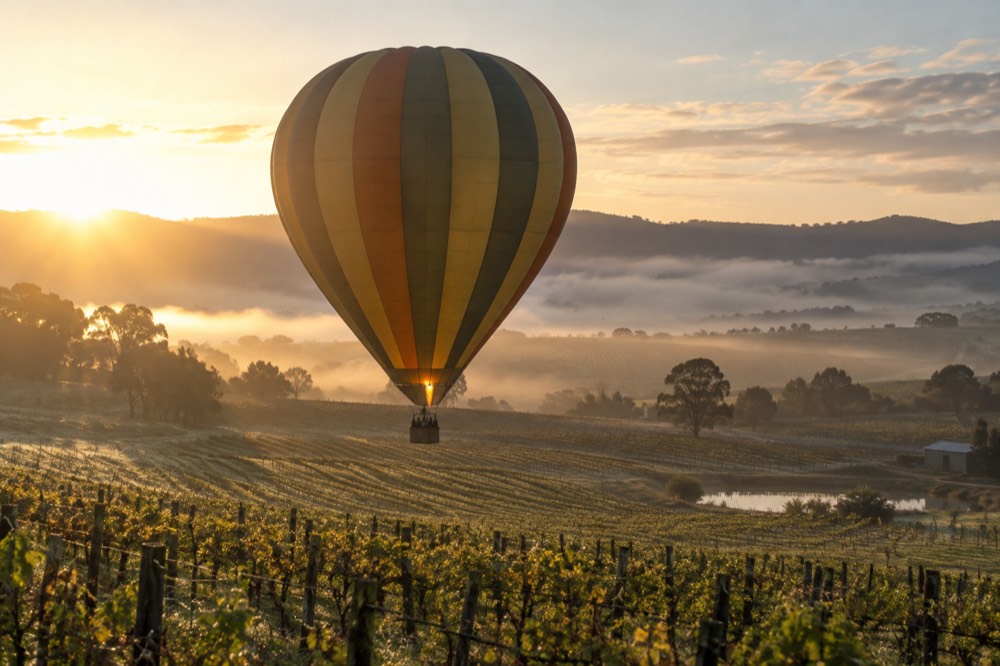
The catch is the same one that runs through this whole guide: getting to the launch site. Flights launch at dawn from valley properties, and the operators' listings state their own meeting arrangements, so read the listing rather than assuming a city pickup. Some flights pair with a winery breakfast afterwards, which turns the morning into a complete car-free experience if the logistics line up.
How Do You Plan A Car-Free Day That Actually Works?
Pick one strategy and commit to it. The three that work are: train plus Healesville's walkable cluster, for the cheapest day; the hop-on hop-off wine bus or a half-day tour, for the most cellar doors per hour; and a balloon morning, for the most memorable single experience. The strategy that fails is improvising rideshares between rural cellar doors, which costs more than a tour and delivers less.
A realistic car-free itinerary using the train looks like this. Catch a direct Lilydale service from Flinders Street, median 55 minutes. Change at Lilydale to route 685, about 44 minutes to Healesville. Spend the afternoon in the Makers Quarter and the town, which is walkable from the bus stops. Return on an afternoon bus and train, checking the last connections before you commit. Total fare while the half-price policy runs: capped at $5.70, and free for anyone under 18 with a Youth myki.
The driven-day strategy needs less planning and delivers more of the region. Every tour on this site offers free cancellation, so the standard advice is to book early, especially for weekend dates in the warmer months, and adjust if your plans change. For anyone weighing the two approaches against a budget, the Yarra Valley wine tour cost guide breaks down what a driven day includes and what it does not.
One last note on the season. The Yarra Valley is a cool-climate region: January, the hottest month, averages a mean maximum of 28.2 degrees at the Coldstream weather station, and July, the coldest, 13.5. There is no bad month for a car-free day, only different ones, and the train-and-bus option is at its best in the shoulder seasons when you are not racing the heat.
Common Questions
Can you get to the Yarra Valley by train from Melbourne?
Yes, as far as Lilydale. The Lilydale line takes a median 55 minutes from Flinders Street on a direct service, and Lilydale Station is the end of the rail network. The wine region sits beyond it, from 9 to 29 kilometres further on, served by bus route 685.
Does any public transport reach a Yarra Valley cellar door?
No. Not one of the 39 stops on route 685, the Lilydale to Healesville bus, is named for a winery, vineyard or cellar door. The closest it comes is two stops at TarraWarra, the Museum of Art and the Abbey.
How much does the train to Lilydale cost?
Victorian public transport is half price for everyone from 1 June 2026 until 1 January 2027, so the full-fare daily cap is $5.70 and the concession cap $2.85, covering the train and the valley buses together. After 1 January 2027 the full-fare cap returns to $11.40. Under-18s travel free with a Youth myki.
Is rideshare a good way to visit Yarra Valley wineries?
For one stop, sometimes. For a day of three or four cellar doors, no: each leg is a separate booking in a rural area with thin availability, and it costs more than a driven tour while delivering less. It works best as a connector between Lilydale Station and one walkable cluster.
What is the best car-free way to taste Yarra Valley wine?
Three options work: a day built around Healesville Makers Quarter, the walkable six-producer precinct reached by train and bus; the hop-on hop-off wine bus, from $68.26, which connects cellar doors directly; or a driven half-day tour with hotel pickup, from $85.87.
Can you do a Yarra Valley balloon flight without a car?
You can, but read the listing first. Flights launch at dawn from valley properties such as Chateau Yering, from $334.14, and each operator states its own meeting arrangements. Some options pair the flight with a winery breakfast, which completes the morning without any driving on your part.