What Is The Most Famous Wine Region In Australia?
Barossa, Margaret River, Hunter Valley and Yarra Valley measured on plantings, exports and visitor numbers rather than reputation alone.
What Is The Most Famous Wine Region In Australia?
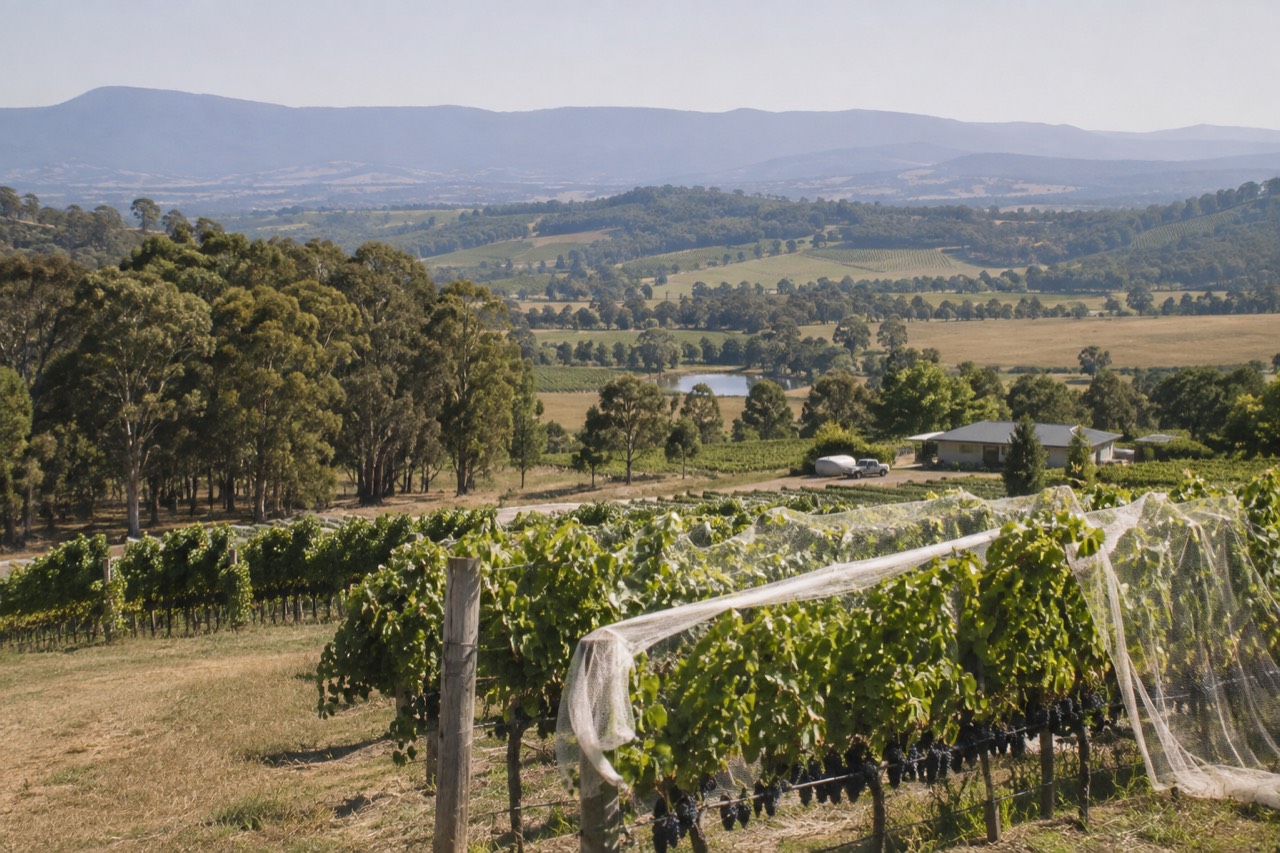
There is no official title, and the honest answer depends on the measure. The Barossa Valley is the name most cited internationally, the Hunter Valley is the oldest continuously planted region tourists can visit, Margaret River leads on premium exports per hectare, and the Yarra Valley is the region closest to a major city, about an hour from Melbourne. Each claim can be tested against published data rather than reputation.
Fame and quality are not the same thing, and neither is fame and size. When an overseas wine writer says "Australian wine", the image that comes to mind is usually big reds from South Australia, and the Barossa is the shorthand for that. When a Melburnian plans a weekend, the region they can actually reach is the Yarra Valley. When a sommelier in Sydney or Shanghai picks a bottle off a list, the label they reach for tells you something about export value, not about how many people visited the cellar door.
The problem with almost every "most famous wine region" article is that it answers the question with adjectives. This one tries to answer it with the measurements that exist. None of them crowns a single winner, because Australia has no official ranking of wine region fame, but together they show where the weight of the industry actually sits. A region can be famous among sommeliers and unknown to tourists, or the reverse, and the numbers below make that split visible rather than leaving it to opinion.
Start with the one measure that is genuinely national and genuinely current. The Australian winegrape crush was an estimated 1,265,671 tonnes in 2026, the smallest since 2000, down 19 per cent on the previous year, according to Wine Australia's National Vintage Report 2026. Every region figure below sits inside that shrinking national pie, which is why a region's share matters more than its raw tonnage this season. White grapes took 53 per cent of the national crush, only the second time in twelve years that whites have been the majority, a shift that quietly favours cool-climate regions over the warm-climate red specialists.
How Do You Measure Famous?
Three measurements work: what is planted, what is exported, and who visits. Plantings show the industry's long-term bet on a region, exports show what the world's buyers recognise on a label, and visitor numbers show which region ordinary travellers actually choose. The Yarra Valley holds measurable, sourced figures on all three, which is more than most regions can say.
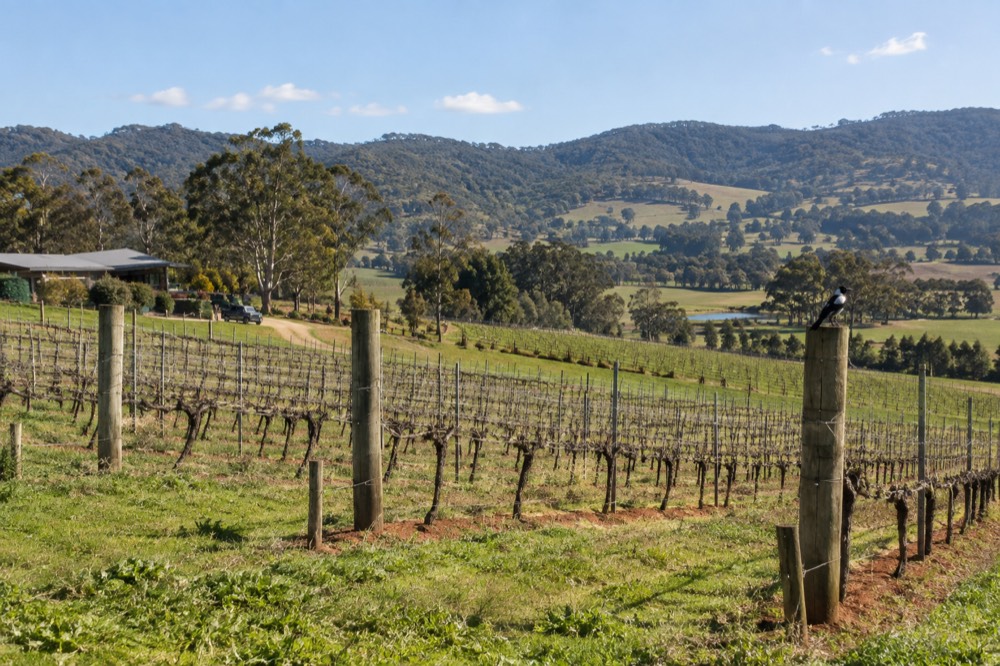
Plantings first. The Yarra Valley GI covers 3,120 square kilometres, but only 2,837 hectares of that is vineyard, measured by the National Vineyard Scan 2020 and still the current published figure in Wine Australia's Region snapshot 2025-26. That is 2 per cent of Australia's total vineyard area and 11 per cent of Victoria's. A small planted area is not a barrier to fame: it can be the opposite, because scarcity is part of how premium regions are marketed.
Exports second. Yarra Valley label-claimed bottled wine exported at an average of $21.07 per litre in the year ending June 2026, up 10 per cent while volume fell 14 per cent. That is the premium end of the market recognising a name on a label and paying for it, and the value rising while volume falls is the classic signature of a region selling on reputation rather than on bulk. Where that wine goes tells the same story: China mainland took 48 per cent of the region's bottled export volume, and 37 per cent of it sold at $20 and over, against 8 per cent for all Australian bottled exports.
Visitors third, and this is where the geography of fame becomes obvious. The Yarra Ranges Council region, a local government area much larger than the wine region itself, accounts for 6.3 per cent of all day trippers across Victoria on the most recent figures, up from 5 per cent in 2018-19. For comparison, the Mornington Peninsula tourism region, the other wine country within day-trip range of Melbourne, received 7.9 million visitors in calendar 2024, of which 5.7 million were domestic daytrippers. No matching Tourism Research Australia figure for the Yarra Valley tourism region could be obtained, so the honest comparison is a share against a count, with the geography of each stated plainly.
| Measure | Yarra Valley figure | What it is a measure of |
|---|---|---|
| Vineyard area | 2,837 hectares | 2 per cent of the national vineyard, National Vineyard Scan 2020 |
| Estimated 2026 crush | 6,766 tonnes | Down 31 per cent on 2025, raised for survey non-response |
| Export value | $21.07 per litre | Label-claimed bottled exports, year ending June 2026 |
| Day-tripper share | 6.3 per cent of Victoria's day trippers | Yarra Ranges local government area, up from 5 per cent in 2018-19 |
The pattern in that table is a small, expensive, heavily visited region. That is a real kind of fame, and it is different from the Barossa's fame, which rests on volume and a century of international marketing of Shiraz. Neither is more legitimate. They are different businesses built on the same word.
Which Region Does The Wine Industry Itself Rank Highest?
No single body crowns Australia's best or most famous region, but two independent ranking bodies publish named winners each year. In 2026 The Real Review named Yarra Yering, a Yarra Valley producer, its Winery of the Year Australia for the third time. In the 2027 Halliday Wine Companion Awards, Winery of the Year went to House of Arras in Tasmania, while the Yarra Valley took Wine of the Year and Best Value Winery.
That is a more honest answer than any "top ten" list, because it names the awarding body, the year and the winner. The Halliday Wine Companion is the closest thing Australian wine has to an annual industry benchmark: its tasting team assessed more than 7,000 wines for the 2027 edition (see Closest Wine Region). In those awards, Mount Mary Triolet 2024 from the Yarra Valley was named Wine of the Year, White Wine of the Year and Other Whites and Blends of the Year, and Medhurst, also from the Yarra Valley, took Best Value Winery, as Time Out Australia reported.
The year before told a similar story at wine level. In the 2026 Halliday Wine Companion, Pinot Noir of the Year was Mount Mary Pinot Noir 2023 from the Yarra Valley at 98 points, and Cabernet and Blends of the Year was Yarra Yering Dry Red Wine No. 1 2023 at 99 points, though Winery of the Year that year went to Brokenwood in the Hunter Valley. The Real Review, a separate ranking body, named Yarra Yering its Winery of the Year Australia for 2026, the producer's third such title after 2024 and 2021.
What this shows is that the Yarra Valley is not the most famous region by any measure, but it is a region that wins at the top of the judged competitions unusually often for its size. Two consecutive years of named, scored results is the kind of evidence a reader can check, which is why this article quotes awards rather than adjectives. The region's own wine show adds a third layer: at the 2025 Yarra Valley Wine Show, Oakridge Wines won five trophies including The James Halliday Wine of Show for its 2023 864 Funder and Diamond Drive Block Chardonnay, and Dominique Portet took Best Red Wine in Show for its 2024 Fontaine Cabernets.
Where Does The Yarra Valley Actually Sit?
It sits as Victoria's oldest wine region by planting history, its closest wine region to a capital city, and a cool-climate region whose two dominant varieties are Pinot Noir and Chardonnay. Pinot Noir was 44 per cent of the 2026 Yarra Valley crush and Chardonnay 30 per cent, and Yarra Valley Chardonnay was 23 per cent of the entire national Chardonnay crush.
That last number deserves a pause. A region with 2 per cent of the national vineyard area produced nearly a quarter of Australia's Chardonnay tonnes in 2026. It is the strongest single statistic the region holds for national weight, and it comes from the same Wine Australia snapshot as the crush figures above. Pinot Noir is the headline variety by volume, but Chardonnay is where the region's national share is concentrated.
The history claim needs care, because the popular version overreaches. Wine Australia's own education programme calls the Yarra Valley "Victoria's oldest wine region" and teaches it as a tale of two beginnings, with vines in the late 1830s at Yering, a collapse to grazing in the depression, and what the programme calls "a fresh start in the '70s". Heritage Victoria's statement of significance for Chateau Yering, the original Yering Station property, says it was "the first known vineyard in Victoria, vines having been planted there in the late 1830s". Note the hedges: first known, late 1830s. The claim that the Yarra Valley is Australia's oldest wine region does not survive checking, and this site does not make it.
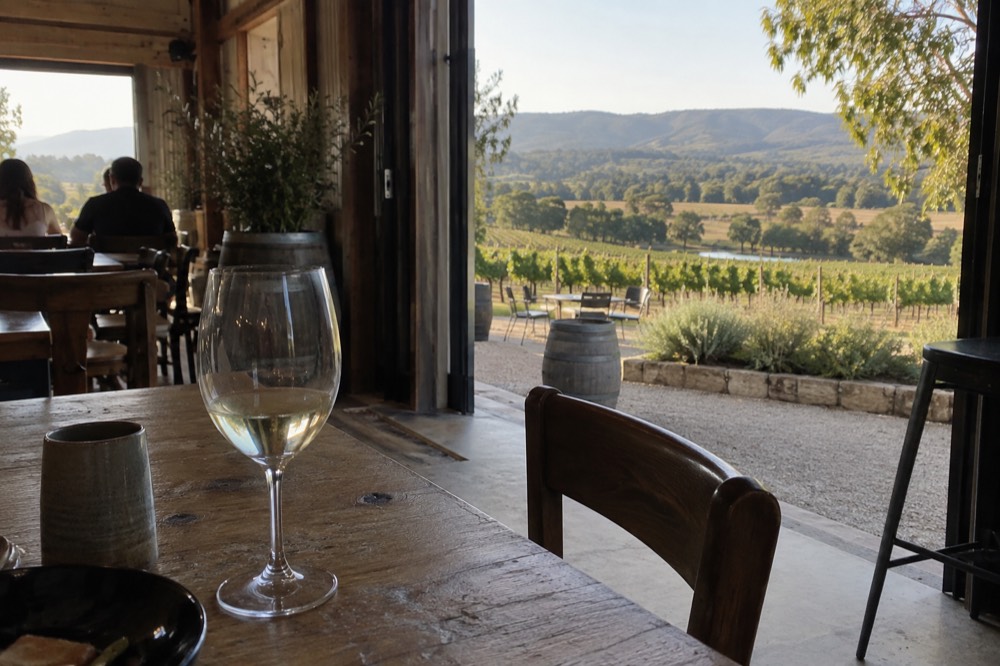
The 2026 vintage was a hard one, and the region's winemakers said so publicly. Yarra Yering's Andrew Fleming described it as second only to 2011 as the most challenging he has worked, citing cold and wet flowering, hail, and rain at the wrong times, in the interview published by The Real Review. The estimated crush fell 31 per cent to 6,766 tonnes, and average yield was 2.4 tonnes per hectare against 8.1 tonnes per hectare nationally. Yarra Valley fruit has never been cheap, and a small crop makes it scarcer still.
For a visitor, none of that changes the cellar door experience much, but it explains the prices. The region's cellar door landscape also changed materially in 2025: Innocent Bystander closed its Healesville cellar door in March, Oakridge closed its fine-dining restaurant in June, while Storm Ridge Estate opened at Coldstream, Punt Road opened a purpose-built cellar door at Coldstream in October, and Healesville Makers Quarter opened as a six-producer walkable precinct. A region in that much motion is worth visiting with a current itinerary, which is one reason a guided day still beats an old blog post. Our Yarra Valley Wine Tours coverage tracks those changes, and the guide to Yarra Valley wineries lists what is actually open.
Does The Most Famous Region Make The Best Wine Tour?
Not automatically, and for Melbourne travellers the question barely arises, because only one of the famous regions is within day-trip range. The Yarra Valley sits about an hour from the CBD by road, so the practical choice is which style of Yarra Valley day, not which famous region to fly to. Small-group, private and hop-on formats all run there daily.
Fame, in other words, is a planning constraint as much as a prize. The Barossa and Margaret River each need a flight plus a drive or a multi-day trip from their nearest capital. The Hunter Valley is two hours from Sydney. The Yarra Valley is the one famous region an interstate or international visitor can add to a Melbourne stay without rearranging the whole trip, and the 6.3 per cent day-tripper share shows how heavily it is used that way. The Victorian Government has also put its own weight behind the sector, publishing the Victorian Wine Strategy 2025-2030 in September 2025, a signal that the state sees wine tourism as a growth industry rather than a heritage curiosity.
The format choice matters more than the region choice once you are here. A small-group day in a six-guest Mercedes van, running to Domaine Chandon, Soumah of Yarra Valley and De Bortoli with lunch at the Heritage Golf and Country Club, is a different experience from a 40-seat coach, and the roster's ratings reflect that: the small-group premium options sit at 4.8 to 5 across their review counts, with hotel pickup and free cancellation standard. For readers weighing the formats against each other, the small-group tour guide breaks down the trade-offs in detail.
The premium end of the market exists precisely because the region is famous enough to justify it. A private, build-your-own winery day priced from $642.58 per group, or a six-guest van day from $205.62 per person, only works in a region that international visitors already know the name of. That is fame doing quiet commercial work, and it is measurable in the tour roster itself.
Common Questions
What Is The Most Famous Wine Region In Australia?
There is no official title. The Barossa Valley is the most internationally recognised name, the Hunter Valley is the oldest region within easy reach of a capital city, Margaret River leads on premium exports, and the Yarra Valley is the closest wine region to Melbourne and the one most often visited as a day trip. Fame depends on which measure you use.
Is the Yarra Valley Australia's oldest wine region?
No, and that claim should not be made. Wine Australia's education programme calls it "Victoria's oldest wine region", and Heritage Victoria records vines planted at Yering in the late 1830s, the first known vineyard in Victoria. Claims about the whole country do not survive checking.
Which region wins the most wine awards?
No region dominates. In the 2027 Halliday Wine Companion Awards, Winery of the Year went to House of Arras in Tasmania, while the Yarra Valley's Mount Mary Triolet 2024 took Wine of the Year and Medhurst took Best Value Winery. The Real Review named Yarra Yering, in the Yarra Valley, its Winery of the Year Australia for 2026.
Why is Yarra Valley wine more expensive than other Australian wine?
Small crops and high fruit prices. The 2026 estimated crush was 6,766 tonnes at an average yield of 2.4 tonnes per hectare, and exported Yarra Valley bottled wine averaged $21.07 per litre, rising in value while volume fell. Scarcity plus recognised labels equals premium pricing.
Can you visit the Yarra Valley as a day trip from Melbourne?
Yes, and that is central to its fame. Coldstream, the heart of the cellar door cluster, is about 51 km from the CBD by road, and the Yarra Ranges region accounts for 6.3 per cent of Victoria's day trippers. Dozens of guided tours run there daily with hotel pickup.
What grape varieties is the Yarra Valley known for?
Pinot Noir and Chardonnay dominate. Pinot Noir was 44 per cent of the 2026 crush and Chardonnay 30 per cent, and Yarra Valley Chardonnay accounted for 23 per cent of the national Chardonnay crush, a remarkable share for a region with 2 per cent of the national vineyard.